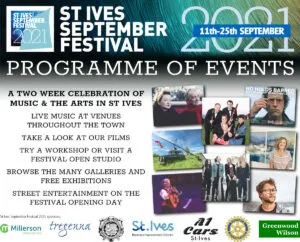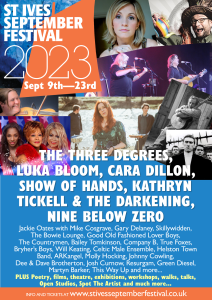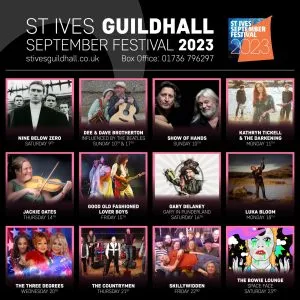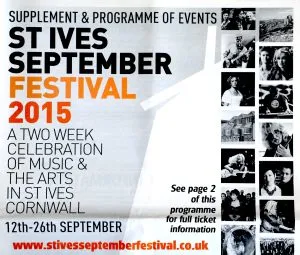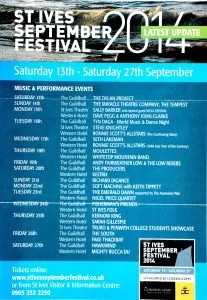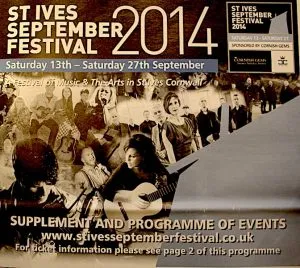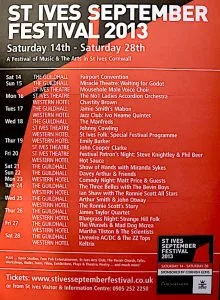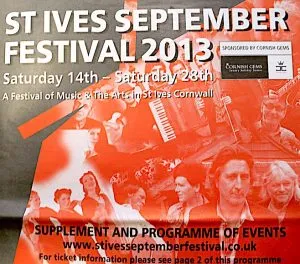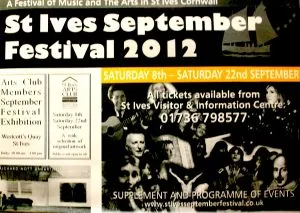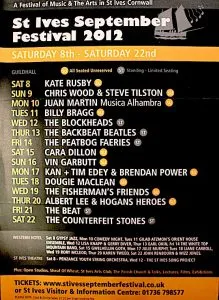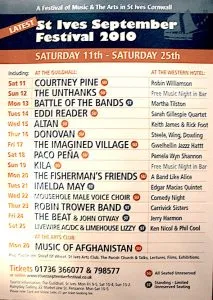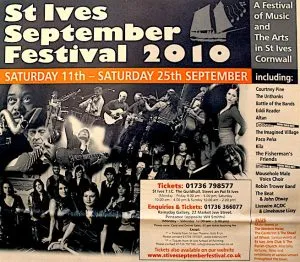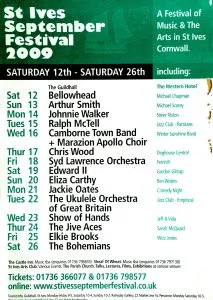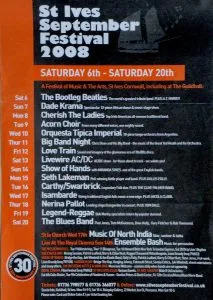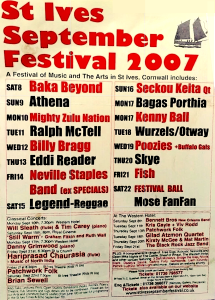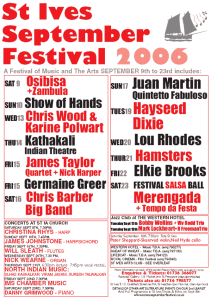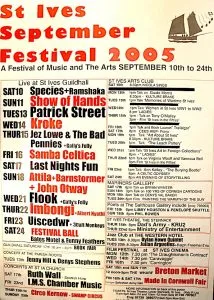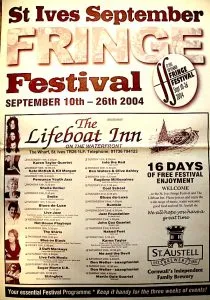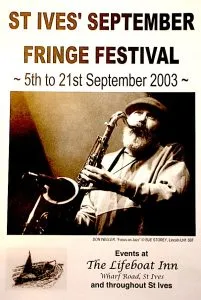
The St Ives September Festival began in 1977, when a group of artists and musicians gathered in a back kitchen in Teetotal Street with a shared ambition: to create a celebration of music and the arts that reflected the town’s vibrant cultural life. Their vision became reality the following year. The first Festival, held from 14–24 September 1978, was impressively wide‑ranging, featuring folk music, dance, fine art, chamber music, animated film, poetry, theatre, arts and crafts, and Open Studios. Early performers included a young Nigel Kennedy, cellist Steven Isserlis and Cornish baritone Benjamin Luxon, with poetry readings from W. S. Graham and Charles Causley.
From the outset, the Festival was designed to extend St Ives’ busy summer season into September. Although the town has a resident population of around 11,000, it attracts large numbers of visitors during the summer months. The Festival offered a way to encourage people to stay longer and enjoy St Ives’ cultural richness at a quieter time of year — something it continues to achieve year after year.
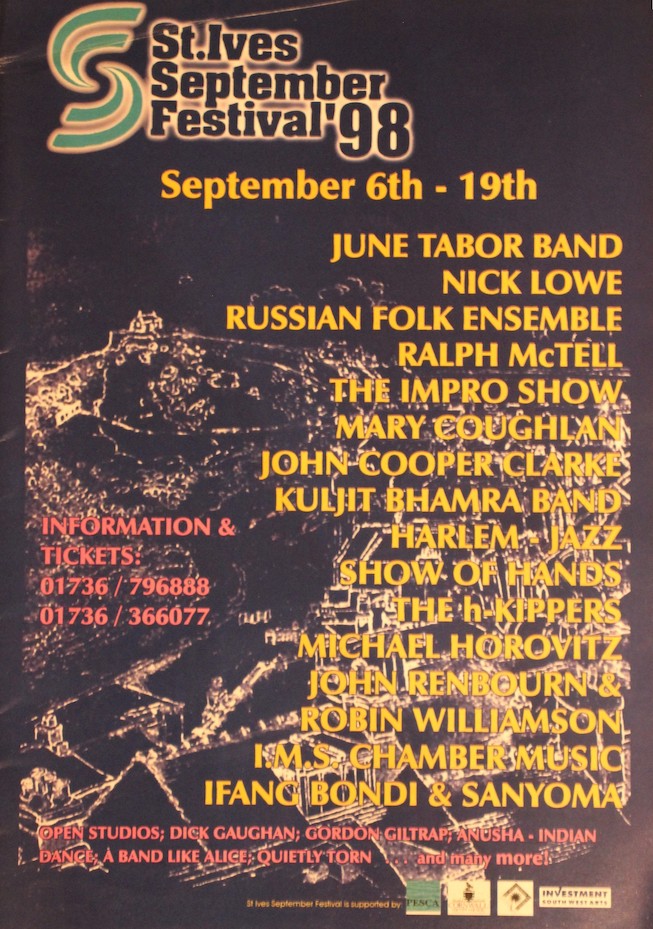
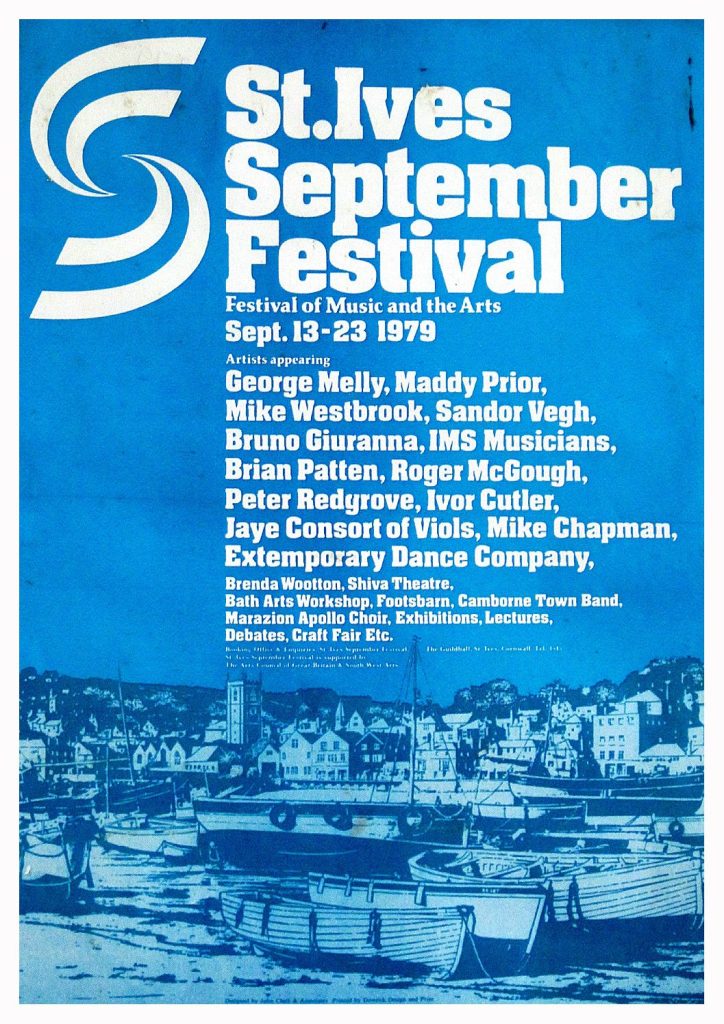
As the Festival grew, so did its reputation. Over the decades it has welcomed many well‑known performers, including Steeleye Span at the Guildhall in 1997 and George Melly at the Royal Cinema. The St Ives School of Painting began offering popular art classes, while Bob Devereux’s daily poetry sessions — first at the Salthouse Gallery and later in Norway Square — became a much‑loved tradition that remains part of the programme today.
Despite a few interruptions, particularly in the late 1980s, the Festival has thrived for more than forty years. Originally supported by South West Arts, it has since been funded by a mix of sources, especially local businesses. Throughout its history, the Festival has been driven by volunteers: a dedicated committee, each member responsible for a different part of the programme, supported by a large team of stewards. Today, the Festival operates as a not‑for‑profit company, continuing the community‑led spirit that shaped its beginnings.
The Festival’s importance has grown alongside major cultural developments in St Ives. The opening of Tate St Ives in 1993, the modernisation of the Leach Pottery in 2008 and the refurbishment of Porthmeor Studios in 2014 have all strengthened the town’s artistic identity. These organisations, along with many others, work closely with the Festival to help create what many consider one of the finest two‑week arts festivals in the country.
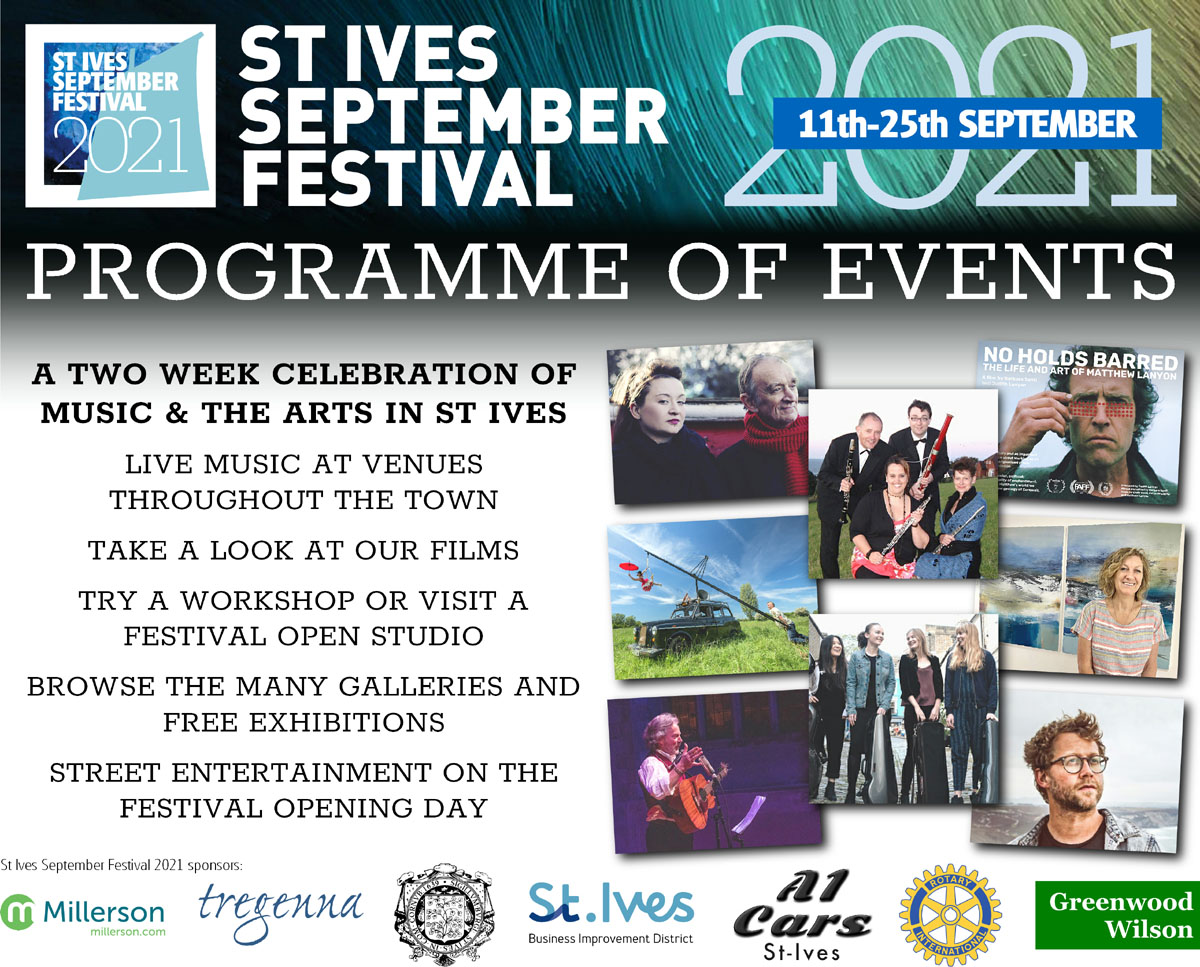
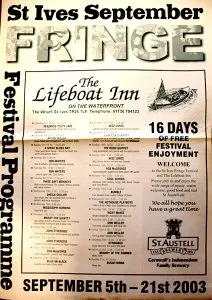
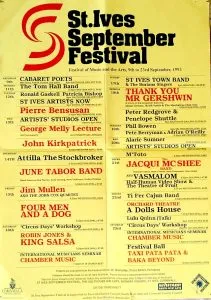
The journey has not been without challenges. After running from 1978 to 1986, the Festival paused due to financial difficulties. It returned in 1994, continued until 2001 and then re‑emerged in a lower‑key “Fringe” format until 2004, when it once again regained its full profile. In 2020, like all major events, it was cancelled due to Covid‑19. The following year, however, the newly formed committee made the bold decision to go ahead when many other festivals remained closed.
More unexpected hurdles followed. The death of Queen Elizabeth II just 48 hours before the start of the 2023 Festival created uncertainty, but the event went ahead and was warmly welcomed by locals and visitors seeking a lift in difficult days. In 2024, the closure of The Guildhall — the Festival’s main venue — prompted a shift to alternative spaces, resulting in a more community‑focused Festival that was widely praised.
With The Guildhall still undergoing renovation, the St Ives Theatre has been our main venue in 2025 and 2026, as the Festival continues to evolve and adapt.